
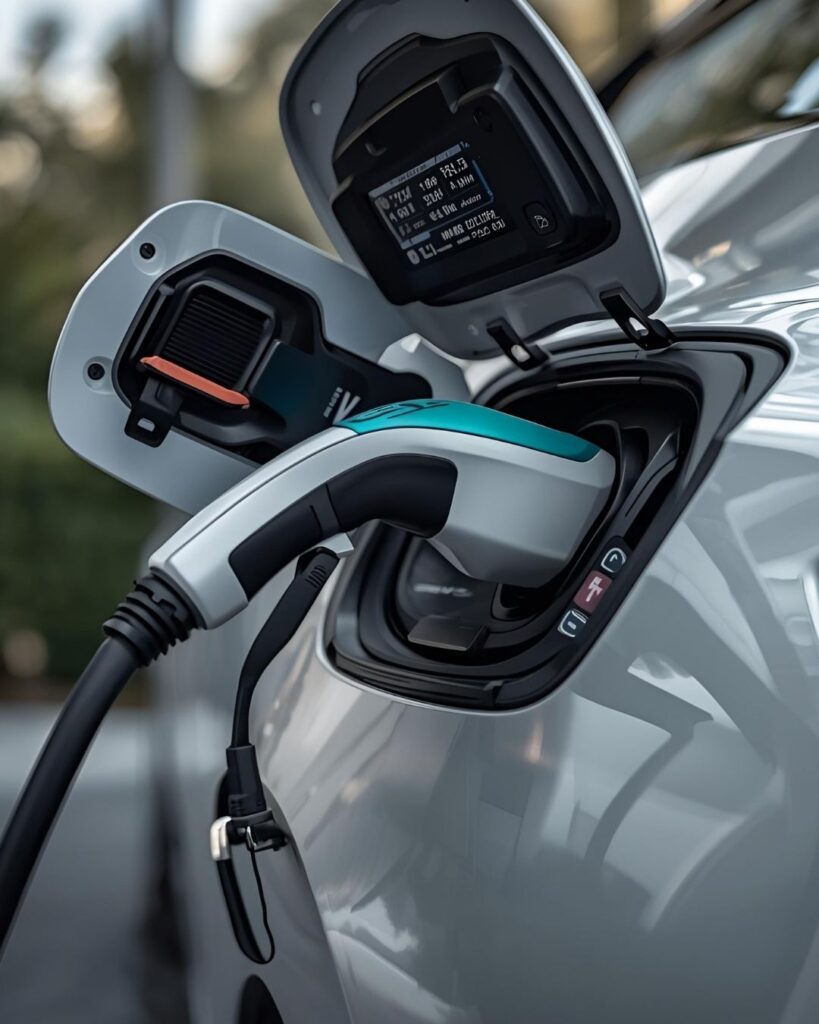
Rowlands Castle’s mix of larger detached homes and period cottages, most with their own driveway or off-street parking, makes it one of the better-suited villages in the area for home EV charging — you’re not fighting for kerbside space the way you might be in the middle of a town. If you’ve recently gone electric, or you’re weighing it up, here’s what installing a home charger actually involves and what it costs in 2026.
Why bother with a dedicated home charger?
You can technically charge an EV from a standard three-pin socket using the granny cable that comes with most cars, but almost nobody sticks with that for long. A three-pin connection trickles in around 2–2.3kW, which means 24 hours or more for a meaningful charge, and household sockets weren’t designed for sustained high-current loads over long periods.
A dedicated 7kW home charger gives a full overnight charge in around 6–8 hours for most family cars, on a connection built specifically for the job, plus smart features like cheap-rate scheduling and energy monitoring that can meaningfully cut your running costs if you’re on a time-of-use tariff.
Which charger should you choose?
For most Rowlands Castle homes on a single-phase supply, a 7.4kW wall-mounted charger is the right size. Larger properties with a three-phase supply can step up to 22kW, though 7.4kW covers almost all overnight charging needs in practice.
Tethered chargers have the cable permanently attached — simple and quick to use, though the cable type (almost always Type 2 now) is fixed.
Untethered chargers have a socket that takes any compatible cable — tidier when not in use, and flexible if you change cars.
Smart chargers connect to your home Wi-Fi for scheduled cheap-rate charging, usage tracking and solar integration. Every home charger sold in the UK since 2022 must include smart functionality by law.
We install Ohme, Hypervolt, Easee, Wallbox and Zappi units, among others — the right one usually comes down to your car, your tariff and whether solar is in the picture.
What does it cost in 2026?
A standard home EV charger installation in the Rowlands Castle area typically falls between £900 and £1,400, fully fitted and tested. That usually covers the charger, all cabling, isolation, certification, DNO registration and the required OZEV notifications.
What pushes it towards the higher end: a long cable run from the consumer unit to the charger location (particularly relevant for Rowlands Castle’s larger plots, where the charger might sit further from the meter than in a typical terrace), drilling through solid walls, running cable under a driveway, or a consumer unit that needs upgrading first. A short, simple run where the charger sits close to the meter cupboard can come in below that range.
What about grants in 2026?
The old Electric Vehicle Homecharge Scheme for single-property homeowners closed in 2022. OZEV grants in 2026 are mainly available for renters and leaseholders, flat owners where on-street parking is the only option, and small businesses with eligible fleet vehicles — worth checking, but most Rowlands Castle homeowners with their own driveway won’t qualify. We’ll confirm eligibility and handle the paperwork if you do.
What installation actually involves
A typical home charger installation takes around four to six hours from arrival to handover. After confirming the charger location with you, the installer runs a new dedicated circuit from your consumer unit, fits the charger and its isolation, tests everything, and registers the installation with your DNO and OZEV where required. You’re left with a working, app-linked charger, an Electrical Installation Certificate and a quick walkthrough.
Most jobs are done in a single visit. The exceptions are where the consumer unit needs upgrading first, or where significant cable routing across a larger garden or driveway is involved — in either case we’ll agree the work and pricing with you before the day.
Things to check before you book
Do you have off-street parking with a wall or sturdy post within a reasonable distance of your consumer unit? Is your consumer unit modern — say, under 20 years old — and in good condition? Rowlands Castle includes a conservation area around the village green and the older cottages near the church, so if your property sits within it, mention this when booking — it can affect what’s permitted for exterior fittings, though in the large majority of cases a home EV charger still falls under permitted development with no planning permission required.
Choosing a local installer
Not every electrician is approved to install EV chargers. Look for someone OZEV-approved, NAPIT registered, holding the relevant EV installation qualifications, and genuinely local — if anything needs adjusting later, you want someone who can come back easily rather than a national firm subcontracting to whoever’s nearest that day. Our team is OZEV-approved and covers Rowlands Castle, Horndean and the surrounding villages regularly — see our EV charger installation page for the full service details.
Solar panels and battery storage
Rowlands Castle’s larger roofs and driveways make it a good candidate for solar, and if you already have panels — or you’re planning to add them — a charger like the myenergi Zappi can prioritise surplus solar generation to charge your car for close to free on sunny days, only drawing from the grid when needed. If you don’t have solar yet but might in future, mention it when booking; choosing a solar-ready charger now avoids swapping it out later.
Frequently asked questions
Do I need planning permission for a home EV charger in Rowlands Castle? In almost all cases, no — home EV chargers fall under permitted development. The exception is properties within the village’s conservation area or listed buildings, where it’s worth checking with us first.
How long does installation take? Usually four to six hours for a standard install, completed in a single visit.
Can I charge from solar power? Yes, with a solar-compatible smart charger like the myenergi Zappi, which prioritises your own generation before drawing from the grid.
What if I don’t have off-street parking? Trailing a cable across a public pavement isn’t legal or safe. Speak to us about wall-mounted options within your property boundary, or the growing local rapid-charging network along the A3(M) and A27 corridor as an alternative for regular top-ups.
Ready to get charging at home?
If you’re ready to install an EV charger at your Rowlands Castle home, or you’re still weighing up your options, we’re happy to help. See our EV charger installation page for more on charger types and pricing, or get in touch for a friendly chat and a free, no-obligation quote.