
Types of EV Charger Explained | What You Need to Know in Portsmouth
Switching to an electric vehicle is straightforward enough once you have made the decision. Working out how to charge it at home is where things get more complicated — not because it is genuinely difficult, but because the terminology around charger types, speeds and specifications is inconsistent and occasionally misleading.
Portsmouth homeowners face a particular set of considerations when it comes to home EV charging. The city’s high density of terraced housing — particularly across Southsea, Fratton, Milton and the streets surrounding the naval base — means a significant proportion of properties either lack off-street parking entirely or have arrangements that make charger installation more involved than a straightforward driveway installation. At the same time, the detached and semi-detached properties across Drayton, Cosham and Farlington, and the newer builds along the eastern corridor towards Havant, tend to have exactly the kind of setup that makes home charging simple and cost-effective.
This post cuts through the terminology, explains the different types of EV charger clearly, and helps you work out what makes sense for your specific situation in Portsmouth.
The Three Levels of EV Charging
EV charging is typically described in three levels — slow, fast and rapid. These refer to the speed at which power is delivered to the vehicle’s battery, which in turn determines how quickly charging completes.
Slow Charging — 3kW
Slow charging uses a standard domestic three-pin plug socket delivering around 3kW of power. At this rate, adding 10 to 15 miles of range per hour is typical — which means a vehicle with a 60kWh battery starting from empty would take 20 hours or more to reach a full charge.
For occasional top-ups this is workable. As a primary charging method for daily use it is not — particularly in a city like Portsmouth where many residents commute to Fareham, Gosport or further along the M27 corridor and need reliable overnight charging to start each day with adequate range.
There is also a practical concern. A standard three-pin socket was not designed to carry sustained high loads night after night. Using one for EV charging regularly puts the socket, the plug and the associated wiring under a level of continuous stress that can cause overheating and damage over time. Most vehicle manufacturers and electricians advise against relying on a three-pin plug as a long-term charging solution.
Fast Charging — 7kW
A 7kW wall-mounted charger is the standard choice for home installation across Portsmouth and the rest of the UK, and for most homeowners it is the right answer. At 7kW, a typical EV adds 25 to 30 miles of range per hour — meaning most current electric vehicles can be charged from a typical daily depletion level to full overnight, without needing to start charging the moment you arrive home.
A 7kW charger requires a dedicated circuit from the consumer unit, a registered electrician to install it, and notification to the Distribution Network Operator. It also needs to be a smart charger — more on that below. The installation is a single day’s work for most Portsmouth properties with off-street parking and a suitable consumer unit, and the cost is significantly lower than most homeowners expect.
Some older properties have a single-phase supply that limits the maximum output to 7kW. This applies to the majority of Portsmouth’s housing stock — the Victorian terraces of Southsea, the Edwardian semis of Milton, and the post-war housing across Paulsgrove and Wymering are almost all single-phase. For these properties, 7kW is the practical ceiling for home charging without significant infrastructure work.
Rapid Charging — 22kW and Above
Rapid chargers operate at 22kW or above and can add substantial range in a short time. At 22kW, a compatible vehicle can gain over 100 miles of range in an hour.
The catch is that 22kW three-phase chargers require a three-phase electricity supply, which most domestic properties in Portsmouth do not have. Three-phase supply is common in commercial premises and some larger detached properties, but it is the exception rather than the rule in residential streets. Checking whether your property has single or three-phase supply is straightforward — your electrician can confirm from the incoming supply and consumer unit — but for the vast majority of Portsmouth homeowners, 22kW home charging is not a realistic option without a significant and expensive infrastructure upgrade.
Rapid and ultra-rapid chargers at 50kW, 100kW and above are the public charging infrastructure you find at motorway services and dedicated charging hubs. These are not home installation options — they require commercial-grade electrical infrastructure that is entirely outside the scope of a domestic installation.
Smart Chargers — Why They Matter
Since December 2022, all new home EV charger installations in the UK are legally required to be smart chargers. A smart charger connects to your home wifi network and communicates with the grid, allowing charging to be scheduled, monitored and adjusted remotely.
For Portsmouth homeowners, the practical benefit of a smart charger is primarily about cost. EV-specific electricity tariffs — Octopus Energy’s Intelligent Octopus Go is one of the most widely used — offer significantly lower per-unit rates during off-peak overnight periods, typically between 11pm and 5am or similar windows depending on the tariff. A smart charger can be programmed to begin charging automatically when the cheaper rate starts, and to stop before the rate rises again. Over the course of a year, the saving compared with unscheduled daytime charging is meaningful.
Smart chargers also provide a charging history, allow remote monitoring via a smartphone app, and in some cases integrate with solar panel systems to prioritise charging from generated power rather than the grid. For Portsmouth properties with existing solar PV — increasingly common on the south-facing roofs of detached and semi-detached houses across Drayton and Farlington — this integration can make a significant difference to the running cost of the vehicle.
The Main Charger Brands
The market for 7kW smart home chargers has matured considerably over the past three to four years, and there are now several established brands with strong track records. The most commonly installed in the Portsmouth and Hampshire area include:
Ohme — popular for its tariff integration and clean app interface. Pairs particularly well with Octopus Energy tariffs and automatically schedules charging to minimise cost without any manual input.
Hypervolt — well-regarded for build quality and reliability. A straightforward, solid option that installs cleanly and performs consistently.
Myenergi Zappi — the go-to choice for homeowners with solar panels. The Zappi can be configured to charge exclusively from solar generation, to top up from the grid when solar is insufficient, or to run on a standard schedule. For Portsmouth properties with south-facing roof space and existing solar, it is worth serious consideration.
Pod Point — one of the longer-established brands in the UK home charging market. Widely installed and well supported, with a straightforward app and reliable performance.
Easee — a newer entrant that has gained a strong reputation for its compact design and smart features. Popular on properties where aesthetics matter and a discreet installation is preferred.
The right choice depends on your vehicle, your electricity tariff, and whether you have or are planning solar panels. An experienced installer will advise on which unit suits your specific situation rather than defaulting to whichever brand they happen to stock.
Tethered vs Untethered Chargers
One practical choice that often catches homeowners off guard is whether to choose a tethered or untethered charger.
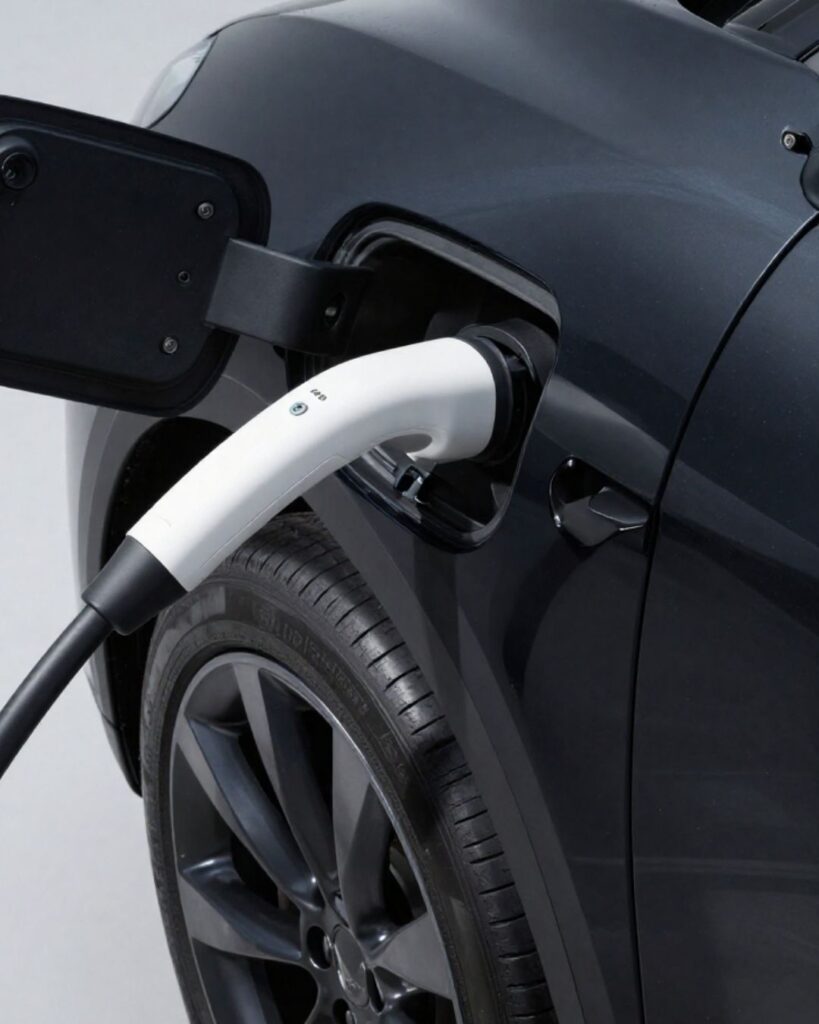
A tethered charger has a fixed cable permanently attached to the unit. You plug the other end into the car. It is more convenient for daily use — the cable is always there, always the right length, and you never need to remember to bring it from the boot.
An untethered charger has a socket on the unit rather than a fixed cable. You plug a separate cable in — one end to the charger, one end to the car. It is slightly less convenient but more flexible if you change vehicles, since different EVs use different connector types and an untethered charger works with any compatible cable.
For most Portsmouth homeowners with a single electric vehicle and a Type 2 connector — the standard for most current EVs — a tethered charger is the more practical everyday choice.
What About Properties Without Off-Street Parking?
This is the most significant constraint on home EV charging in Portsmouth. A large proportion of the city’s terraced housing stock — particularly in Southsea, Fratton, Buckland and the streets around Commercial Road — has no driveway or off-street parking. Without somewhere to park the vehicle adjacent to the property, there is nowhere to mount a charger that allows the cable to reach.
Portsmouth City Council has been expanding its public charging network in response to this, and on-street charge points are increasingly available across the city. These are a practical option for residents without driveways, but they are not a substitute for home charging in terms of convenience or cost.
If you are considering an EV and your property lacks off-street parking, it is worth factoring charging access into the decision before committing to a vehicle — and checking what public charging is available in your immediate street and surrounding area.
Getting an EV Charger Installed in Portsmouth
If your Portsmouth property has off-street parking and a suitable consumer unit, a home EV charger installation is a straightforward job for a registered electrician. Most installations in the Southsea, Cosham, Drayton, Farlington and Havant areas are completed in a single day, and the difference in daily running cost compared with public charging makes the installation cost straightforward to justify.
We carry out EV charger installations across Portsmouth and the wider south Hampshire area — including Fareham, Gosport, Waterlooville and Havant. Get in touch and we will come out to assess your property, advise on the right charger for your situation, and give you a clear fixed price for the installation.