
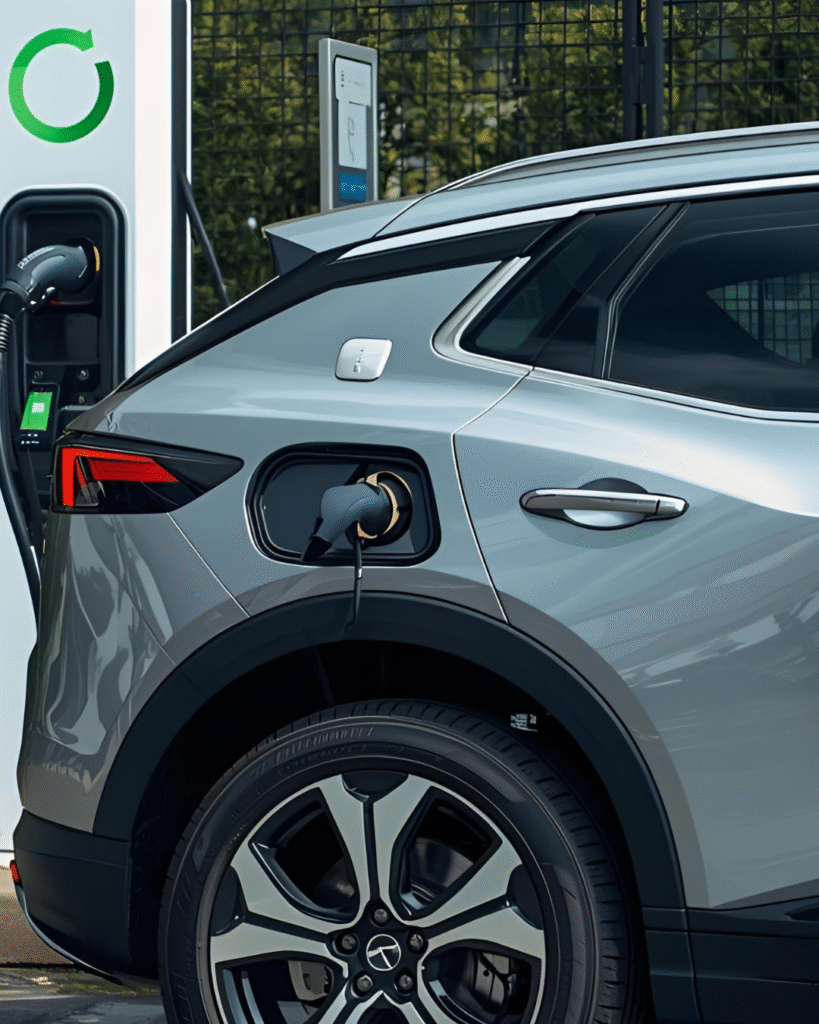
How Much Does an EV Charger Cost in Portsmouth? | Local Electrician’s Guide
Once you’ve bought or ordered an electric vehicle, the next decision is how you’re going to charge it at home. The three-pin plug that comes with most EVs works as a temporary solution, but it’s slow — adding roughly five miles of range per hour — and most manufacturers advise against relying on it permanently because a standard domestic socket wasn’t designed for the sustained high-current draw that overnight charging demands. A dedicated home charger is faster, safer, and cheaper to run, particularly when paired with an off-peak energy tariff that cuts charging costs to a fraction of daytime rates.
But the total cost of getting a charger installed varies depending on the brand you choose, the electrical work your property requires, and the specific characteristics of your installation. This guide sets out realistic prices for home EV charger installations across Portsmouth, explains what affects the cost, and helps you budget accurately before contacting an installer.
What Does a Home EV Charger Cost?
The total cost of a home EV charger installation in Portsmouth consists of two parts — the charger unit itself and the electrical installation work needed to connect it safely to your home’s supply.
The charger unit typically costs between £350 and £800 depending on the brand and specification. At the accessible end, the Ohme Home Pro comes in around £350 to £500 and offers intelligent charging that communicates directly with your energy tariff to charge during the cheapest periods automatically. The Pod Point Solo sits in a similar bracket at £400 to £550, offering reliable smart charging with app control and scheduling. In the mid-range, the Wallbox Pulsar Plus costs £450 to £650 and provides a compact, well-designed unit with power sharing capability for households planning a second charger later. At the premium end, the Easee One costs £500 to £700 and offers the most compact design on the market with built-in load management and expandability, while the Zappi costs £600 to £800 and adds solar panel integration that diverts your own generation into the car rather than exporting to the grid.
The installation typically costs between £300 and £600 on top of the charger price, covering the dedicated circuit from the consumer unit, cable routing to the charger position, earth rod installation, full testing, and certification. This brings the total for a complete installation in Portsmouth to between £650 and £1,400 depending on the charger brand and the complexity of the electrical work.
What Affects the Installation Cost?
The charger unit price is fixed for each brand, but the installation cost varies depending on your specific property and electrical infrastructure. Several factors influence where your installation sits within the typical range.
The cable run distance between your consumer unit and the charger position is the biggest variable in installation cost. A short run — where the consumer unit is on the kitchen wall and the charger mounts on the other side of the same wall next to the driveway — keeps labour and material costs to a minimum. A longer run — where the consumer unit is at the front of the house and the charger needs mounting at the rear, or where the cable must route through multiple rooms, along external walls, or underground across a garden — adds cable, labour, and complexity. Every additional metre of cable run adds to the material and installation time.
In Portsmouth’s terraced housing across Southsea, Old Portsmouth, and the streets around Fratton, the consumer unit is often at the front of the property while the most practical charger position is at the rear where off-street parking exists. This means longer cable runs through or around the property, which pushes installation costs toward the upper end of the range. Detached and semi-detached properties across Cosham, Drayton, and Farlington often have shorter, more direct cable routes because the consumer unit and parking are on the same side of the house.
Your consumer unit’s condition and capacity directly affects whether additional work is needed alongside the charger installation. A 7kW EV charger requires its own dedicated circuit with a 32-amp protective device at the consumer unit. If your board has spare ways and adequate RCD protection, connecting the new circuit is straightforward and included in the standard installation cost. If the board is full, an additional way or a complete consumer unit upgrade is needed. If the board lacks RCD protection — common on older boards across Portsmouth — regulations require the new circuit to be RCD-protected, which may trigger a board upgrade. A consumer unit upgrade alongside the charger installation typically adds £300 to £600 to the total cost.
The earthing arrangements at your property may need attention. EV charger installations require adequate earthing, and an earth rod is installed as standard with most chargers. If the existing earthing at your property is deficient — which the electrician checks during the assessment — additional work to bring it up to standard adds a modest cost.
The meter tails and main fuse need to be adequate for the increased electrical demand. A 7kW charger draws 32 amps on top of your normal household consumption. If your property has a 60-amp main fuse — common in older Portsmouth properties — the combined demand of the charger and your household may exceed the available supply during peak usage. Most modern smart chargers include load management that prevents this by automatically reducing the charging rate when household demand is high, eliminating the need for a main fuse upgrade in most cases. If load management isn’t available or sufficient, upgrading the main fuse through your energy supplier is an additional cost, typically £100 to £300.
Mounting requirements affect the installation if you don’t have a wall directly adjacent to where you park. Most chargers mount on a house wall or garage wall beside the parking space. If your parking is further from the building — a detached garage across a driveway, for example — the charger can mount on a freestanding post, which adds the cost of the post and its foundation. Alternatively, a longer tethered cable or a cable run to the detached structure increases the installation scope.
Tethered vs Untethered
This choice affects convenience and cost. A tethered charger has a cable permanently attached — you grab it, plug into the car, and you’re charging. An untethered charger has a socket, and you use your own cable, plugging in at both ends each time.
Tethered is more convenient for daily use, particularly on wet Portsmouth evenings when you just want to plug in and get inside. Untethered is more flexible if you have two vehicles with different connector types or prefer a tidier wall-mounted appearance when the charger isn’t in use.
Most single-vehicle households across Portsmouth choose tethered for the daily convenience. If you opt for tethered, check the cable length — five metres is standard on most chargers, but if your charging port sits on the far side of the vehicle from the charger, or if you park slightly further from the wall than expected, a 7.5-metre cable avoids the frustration of a cable that doesn’t quite reach on certain parking angles.
Running Costs
The installation cost is a one-off investment. The ongoing running cost is where home charging delivers its real financial advantage over public charging.
Charging at home on a standard electricity tariff costs roughly 7 to 10 pence per mile depending on your vehicle’s efficiency and your tariff rate. On a dedicated EV tariff with off-peak overnight rates — such as Octopus Go, Intelligent Octopus, or OVO Charge Anytime — the cost drops to around 3 to 5 pence per mile. Compare that to public rapid charging at 30 to 50 pence per kWh, which works out at 10 to 16 pence per mile.
For a typical annual mileage of 8,000 to 10,000 miles, home charging on an off-peak tariff costs roughly £300 to £500 per year. The same mileage on public rapid chargers costs £800 to £1,600 per year. The saving of £500 to £1,100 annually means a home charger installation pays for itself within one to two years purely through reduced charging costs.
Smart chargers with tariff integration — particularly the Ohme, which communicates directly with your supplier’s pricing data — automate this saving by charging only during the cheapest periods without you needing to set manual timers. You plug in whenever you get home and the charger handles the rest.
Do You Need a Survey?
Most reputable installers offer a free pre-installation survey or assessment where they visit your property, check your consumer unit, measure the cable run, assess your supply capacity, and confirm whether any additional work is needed. This survey is essential for an accurate quote because every property is different and assumptions made remotely often prove wrong once the electrician sees the actual installation.
During the survey, ask about the total installed cost including the charger, all materials, labour, earth rod, testing, and certification. Ask whether a consumer unit upgrade is needed and what that adds. Ask about the cable route and whether it can be run discreetly. And ask about load management if your supply capacity is a concern.
Getting the Best Value
Get quotes from two or three registered installers. Ensure each quote covers the same scope — charger supply, all installation materials, labour, earth rod, testing, and certification. If one quote includes a consumer unit upgrade and another doesn’t, the prices aren’t comparable until you understand why.
Don’t choose on charger brand alone. The cheapest unit isn’t necessarily the best value if it lacks smart features that save you money on energy costs over the following years. An Ohme that saves you £200 per year through intelligent tariff optimisation pays back its higher purchase price within a couple of years compared to a basic charger without that capability.
Check that the installer is registered with a competent person scheme — NICEIC, NAPIT, or ELECSA — and that the quote includes an electrical installation certificate. This certification is required for the installation to be compliant and is important for your home insurance.
If you’re considering a home EV charger at your Portsmouth property, get in touch for a free assessment. We’ll check your electrics, measure the cable run, and provide a clear, all-in quote so you know exactly what’s involved.